Seminars
At Promega, knowledge transfer is paramount. Therefore, we would like you to participate in our scientific projects and share new technologies as they emerge. As part of our seminars and workshops, we update you on the latest innovations from the exciting field of life science.
Topics
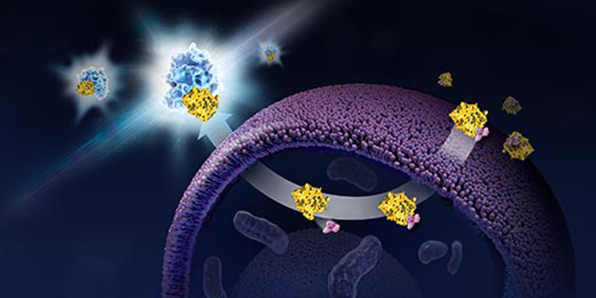
Bioluminescent Reporter Assays for the Detection of Cellular Events
This seminar provides an overview of state-of-the-art luciferase reporter assays for cell viability, cytotoxicity, apoptosis, oxidative stress, and transcriptional activity. We highlight individual assay features/principles and demonstrate how you benefit from real-time analysis and assay multiplexing.
- Luciferase-based gene reporter assays
- Cell viability, cytotoxicity, apoptosis, and oxidative stress assays
- Endpoint, real-time, and multiplexing analysis

Streamline Your RNA Workflow – Hints and Pitfalls of RT-qPCR
This seminar provides tips and tricks to optimize your RT-qPCR analysis. We walk you through the main steps of gene expression analysis: (1) experimental planning, (2) RNA or miRNA isolation from different sample types, (3) reverse transcription (RT), and (4) quantitative PCR (qPCR).
- RT-qPCR workflow
- RNA/miRNA extraction, handling, and protection
- Reverse transcription (RT)
- Quantitative PCR (PCR)
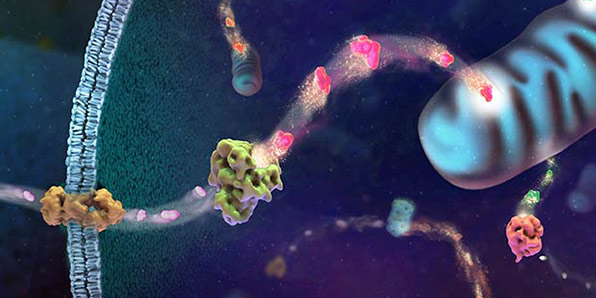
Bioluminescent Reporter Assays for Cellular Responses and Metabolism
This seminar provides an overview of state-of-the-art detection methods for cell viability, cytotoxicity, apoptosis, and oxidative stress. Furthermore, bioluminescent assays for the detection of major cellular metabolites are presented.
- Cell viability
- Cytotoxicity
- Apoptosis
- Oxidative stress
- Cell metabolism
Cell-based Assays – From Basic Principles to Distinct Applications
This seminar introduces different colorimetric, fluorescent, and bioluminescent cell-based assays and highlights their principles, features, and applications. We show how to avoid common pitfalls and provide helpful tips and tricks for successful assay implementation.
- Cell-based assays
- Assay plate types
- Detection modes
- Assay design
- Timing
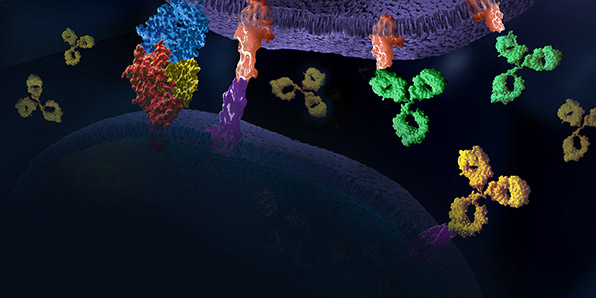
Functional Bioassays for the Development of Therapeutic Antibodies
This seminar introduces a set of bioluminescent reporter assays employed in biotherapeutic development. These so-called bioassays are reflective of an antibodies’ mechanism of action (MOA). They are used for potency evaluation, quality control, and manufacturing lot release. Here we focus on bioassays for the determination of Fc receptor-mediated cellular responses (e.g. ADCC and ADCP), cytokine and growth factor receptor stimulation, T cell activation, as well as immune checkpoint modulation.
- Fc effector bioassays
- Cytokine and growth factor bioassays
- T cell activation bioassays
- Immune checkpoint modulation bioassays
CRISPR & HiBiT – A Perfect Team for Endogenous Protein Reporter Assays
This seminar introduces the bioluminescent HiBiT Protein Tagging System. Its combination with CRISPR genome editing enables scientists to investigate proteins at native expression levels while maintaining transcriptional regulation. HiBiT fusion proteins are easily quantified in an add-and-read assay format with the possibility to monitor changes in protein level over time in live cells.
- Protein stabilization & degradation
- Viral infection
- Signal transduction
- Protein secretion
- Target cell killing
- Receptor trafficking
Bioluminescent Technologies for Studying Protein Biology and Cellular Responses
This seminar introduces innovative technologies to explore protein biology. The versatile technology platforms NanoBRET™ and NanoBiT® enable the investigation of protein interaction dynamics in live cells. The HiBiT Protein Tagging System is ideally suited to monitor cellular protein levels and study protein function. Its combination with CRISPR genome editing provides a tool to study proteins at their native expression level while maintaining transcriptional regulation. Lumit™ Immunoassays are an innovative fast-track method for protein quantification and interaction analysis.
- Protein interactions
- Protein expression, degradation & secretion
- Autophagy, apoptosis & target cell killing
- Receptor trafficking
- Cell signaling
- Immunoanalysis

Adoptive T-Cell Therapy Related Products – Tools for developing new Cell and Gene Therapies
In vitro modified effector-cells like CAR-T cells or T-cells bearing an engineered T-cell receptor are one of the most promising arising therapy options to cure certain forms of cancer. While developing such therapies is cumbersome and costly, they always mean a risk for the patient, tooi.
Researchers have to be absolutely sure about some essential facts concerning their modified effector cells:
- they show a reliable and effective target cell killing
- they only recognize the target which they are directed to
- they are highly viable and can be grown in vitro at a satisfactory rate
You are interested in a seminar, but there is no suitable date near you?
Contact us!