Transfektionsreagenzien
Eine Auswahl an hochwertigen Reagenzien mit erwiesener Wirksamkeit bei der Transfektion. Die Produktpalette umfasst FuGENE® 6, FuGENE® HD und Viafect und bietet damit eine Auswahl an Möglichkeiten für die Transfektion bei niedriger Toxizität für häufige und schwer zu transfizierende Zelllinien.
Filter By
Shop all Transfection Reagents
9 von 9 Produkten werden angezeigt

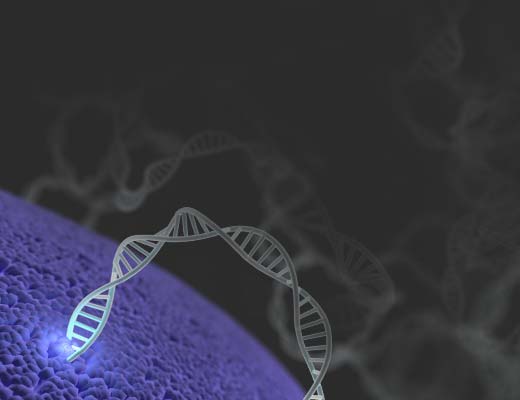

Transfection Reagent Basics
Transfection is the process of introducing nucleic acids into eukaryotic cells by nonviral methods. Using various chemical or physical methods, this gene transfer method enables the study of gene function and protein expression in a cellular environment. Once introduced to the cell, the gene is expressed either transiently or under selection for long-term stable expression.
Transfection overcomes the inherent challenge of introducing negatively charged molecules (e.g., phosphate backbones of DNA and RNA) into cells with a negatively charged membrane. Chemicals like calcium phosphate and diethylaminoethyl (DEAE)-dextran or cationic lipid-based reagents coat the DNA, neutralizing or even imparting an overall positive charge to the molecule. This process makes it easier for the DNA:transfection reagent complex to cross the membrane, especially for lipids that have a “fusogenic” component, which enhances fusion with the lipid bilayer. Physical methods like microinjection or electroporation simply punch through the membrane and introduce DNA directly into the cytoplasm. However, any transfection reagent will require optimization for each cell type and conditions (e.g., confluency, passage number) in which it is used to ensure efficient gene transfer and expression.