PCR
Alles rund um die PCR. Von der Routine-PCR bis hin zu quantitativer real-time PCR. Hot-Start Enzyme, Master Mixe und dNTPs.
PCR Produktgruppen
Taq Polymerase and Endpoint PCR
GoTaq® DNA Polymerasen, Reaktionspuffer und Master Mixe bieten viele zuverlässige Optionen für eine Endpoint-PCR.
PCR Klonierung
Vektorsysteme und Reagenzien für eine einfache Klonierung und Expression von PCR-Produkten.
qPCR und RT-qPCR
Farbstoff- und sondenbasierte Systeme für qPCR oder RT-qPCR.
RT-PCR
Kits, Master Mixe und reverse Transkriptasen für eine Ein-Schritt und Zwei-Schritt Reverse-Transkription PCR.
Top PCR Produkte für Ihr Labor
Need a product modified?
Contact us to discuss custom and bulk formulations, custom packaging and format options for PCR products.


PCR Basics
PCR, the polymerase chain reaction, is a core technique that has revolutionized molecular biology. In PCR, a DNA molecule is targeted and copied multiple times, allowing exponential amplification of the target DNA sequence.
Key components of a PCR amplification reaction are a thermostable DNA polymerase, Deoxynucleotide Triphosphates (dNTPs), reaction buffer and magnesium, two oligonucleotide primers and a thermal cycler that allows controlled cycling of the reaction temperature through multiple rounds of DNA denaturation, primer binding and DNA extension.
Reverse-transcription PCR (RT-PCR) allows interrogation of RNA sequences. In RT-PCR, an RNA target is first reverse transcribed to DNA prior to amplification by PCR.
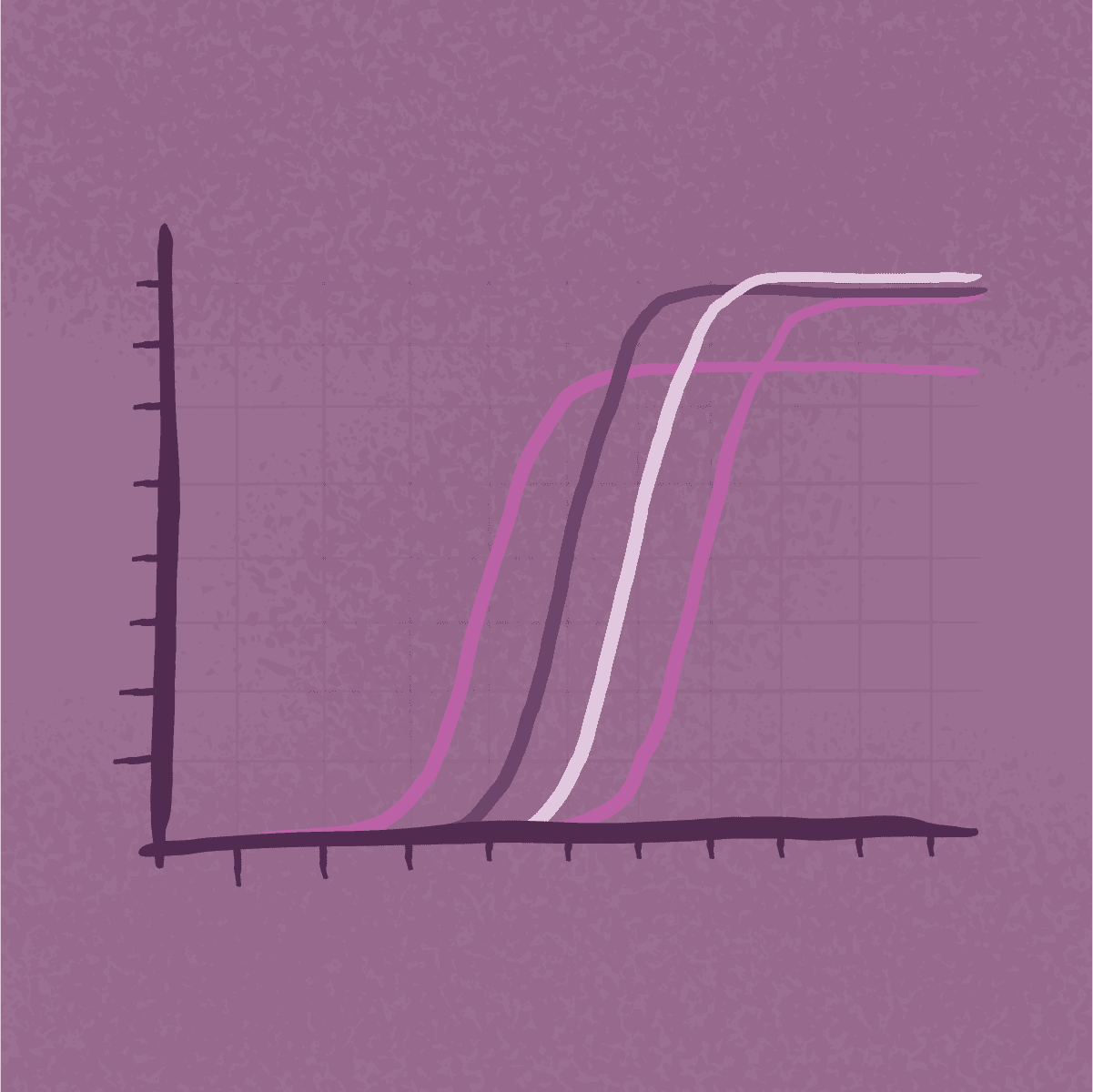
Real-time qPCR provides more sensitive, quantitative analysis of a sample. In qPCR and RT-qPCR, labeled reaction products are detected in real time as the amplification reaction proceeds. qPCR-based methods are a standard means for quantifying target DNA sequences or monitoring gene expression.
Variations between thermostable DNA polymerases are used to optimize reactions for specific purposes. For example, in hot-start PCR, the DNA polymerase does not become active until the denaturation temperature is reached. This minimizes the formation of non-specific amplification products and allows the convenience of room-temperature reaction setup. One of the most efficient methods for hot-start reactions can be achieved using antibodies to block Taq polymerase activity.
Long-range PCR can be achieved using a mixture of thermostable polymerases, like Taq DNA polymerase and a proofreading enzymes lacking the 3´-5´ exonuclease activity, which excises incorrectly incorporated bases in the synthesized DNA strand. This allows greater accuracy and generation of longer target sequences. High-fidelity thermostable polymerases such as Pfu have a low error rate and also possess 3´ to 5´ exonuclease activity.