TarSeer™ BRETSA™ Target Engagement
Bring Challenging Targets within Reach
The TarSeer™ BRETSA™ Target Engagement System offers a cellular, tracer-independent, bioluminescent method to measure compound binding and potency with exceptional sensitivity, even for weak binders and challenging targets.
What is TarSeer™ BRETSA™ Target Engagement?
Drug discovery is increasingly focused on hard-to-study targets—proteins with limited structural information, no known ligands or no reliable functional assays. TarSeer™ BRETSA™ Target Engagement is a cellular, bioluminescence resonance energy transfer (BRET)-based system that detects compound-protein interactions by monitoring changes in target protein stability. The method is suited for early discovery and challenging targets, without requiring access to target-specific antibodies or ligands.
With the TarSeer™ BRETSA™ System, you can:
- Measure target engagement in live cells, even without known ligands or reference compounds.
- Quantify potency for rank-order analysis with the sensitivity needed to detect weak binders.
- Run a simple, addition-only workflow compatible with 384-well plate formats.
- Reach targets that lack functional assays or are difficult to study in isolation.
How Does TarSeer™ BRETSA™ Target Engagement Work?
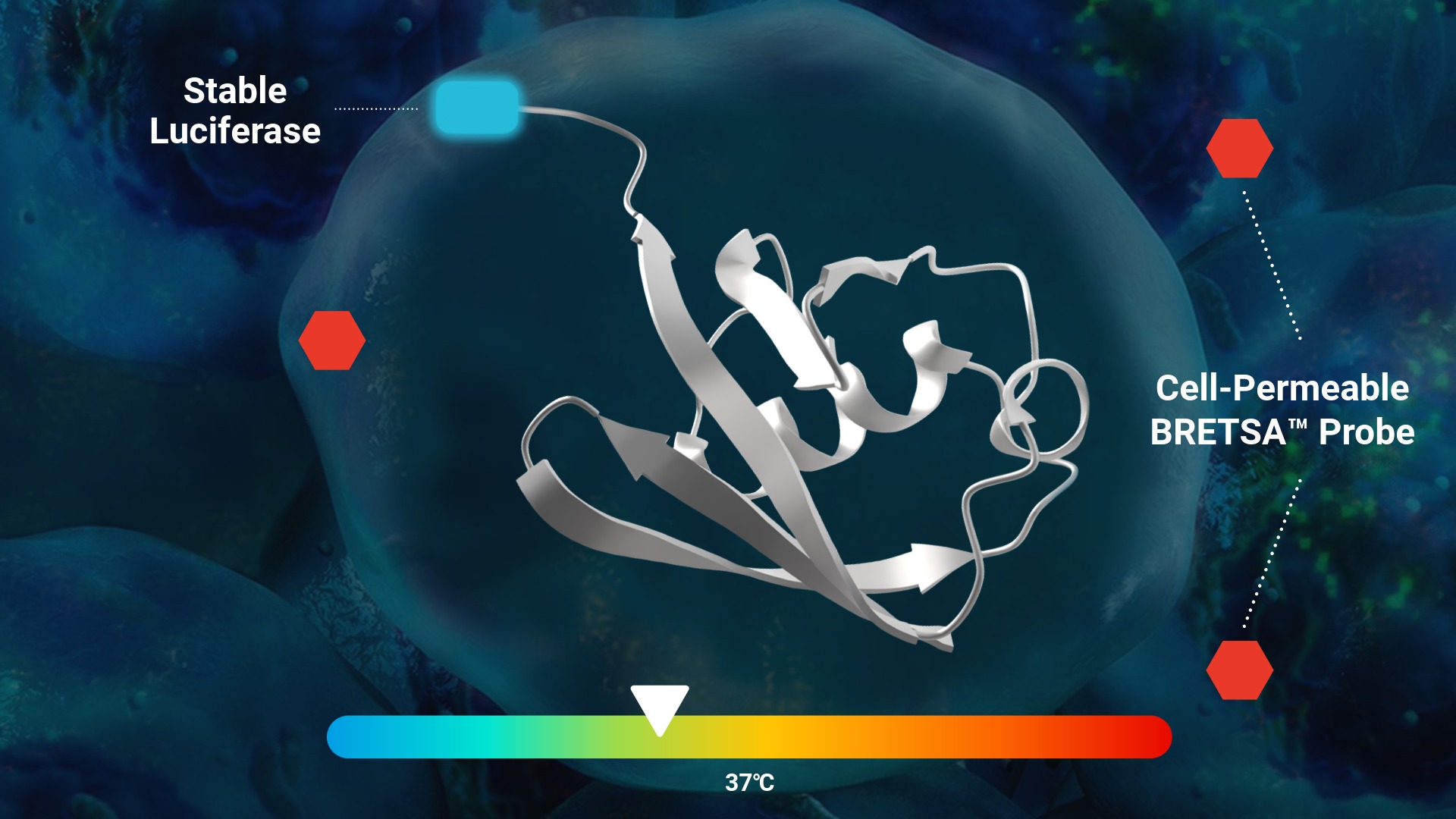
TarSeer™ BRETSA™ Target Engagement measures how compounds alter target protein stability in cells by monitoring thermal denaturation using a bioluminescent readout.
- Start with a luciferase-tagged target expressed in cells. At low temperature, the luciferase-fused target protein is folded. The cell-permeable BRETSA™ probe shows minimal interaction with the folded protein.
- Heat-induced unfolding exposes probe sites. As temperature increases, the target protein denatures and exposes hydrophobic regions, where the fluorescent BRETSA™ probe binds, bringing it close to luciferase.
- Probe binding drives BRET signal. This proximity enables efficient energy transfer between the luciferase and the fluorescent BRETSA™ probe, resulting in an increased BRET signal.
- Compound binding changes thermal stability. When a compound binds the target protein, the protein stabilizes or destabilizes, changing how it unfolds with temperature and altering the BRET signal profile. Compound binding is seen as a shift in BRET profile with increasing temperature (A) or measured as a potency (B).
TarSeer™ BRETSA™ Target Engagement enables direct, cell-based measurement of compound-induced changes in protein stability by translating protein denaturation into a quantifiable BRET signal.
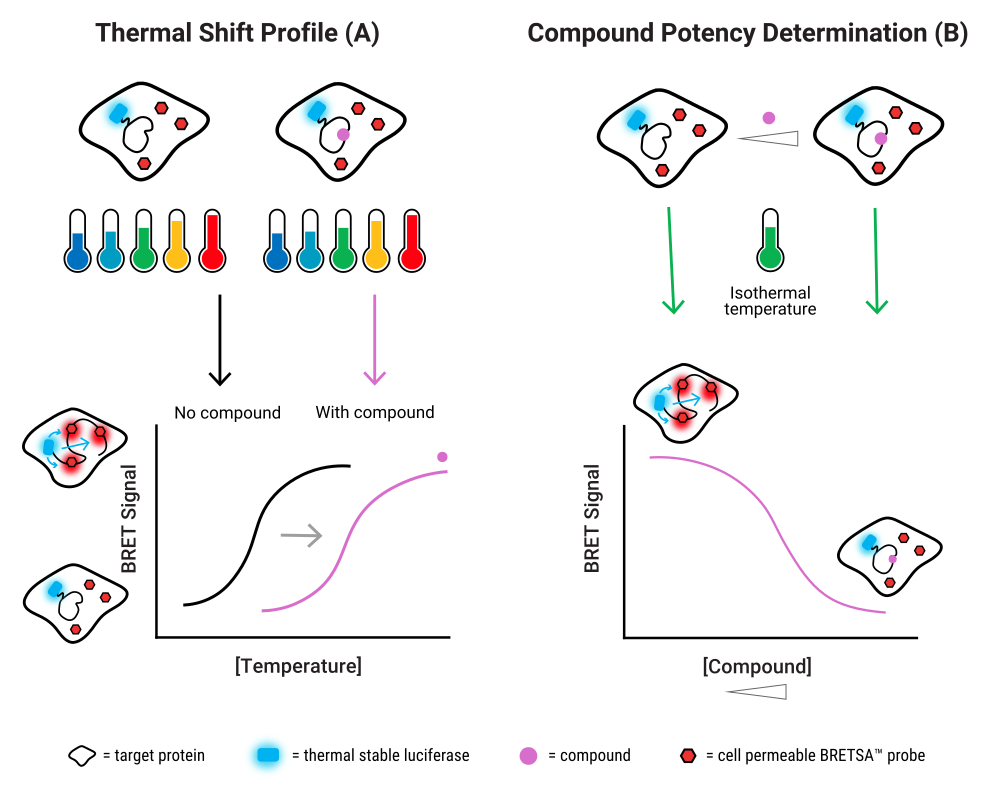
TarSeer™ BRETSA™ Thermal Shift and Isothermal Workflows. Generate cellular melting curves for the target protein with the Thermal Shift Workflow (A). Binding compounds shift the thermal profile and define an optimal challenge temperature. Measure compound potency at this temperature with the Isothermal Workflow (B). In the absence of compound, protein denatures and BRET signal is high, while increasing compound concentrations stabilize the protein and produce a dose-dependent decrease in BRET signal.
Flexible, Scalable Workflow for Drug Discovery
The TarSeer™ BRETSA™ Target Engagement System uses a cellular isothermal workflow for compound potency and screening. The workflow is an addition-only protocol, compatible with 96- and 384-well plates, and scales from focused follow-up studies to high-throughput campaigns.
TarSeer™ BRETSA™ Target Engagement In Action
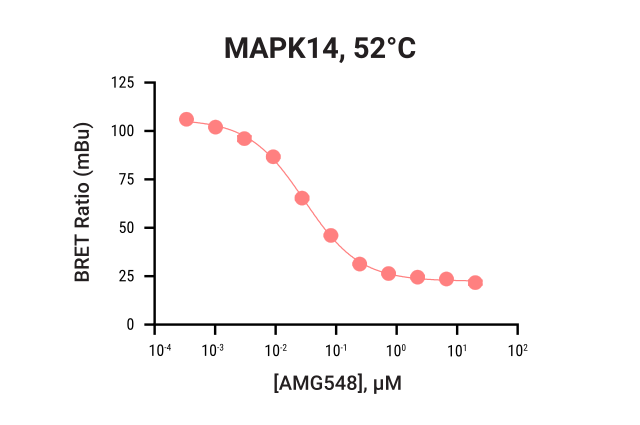
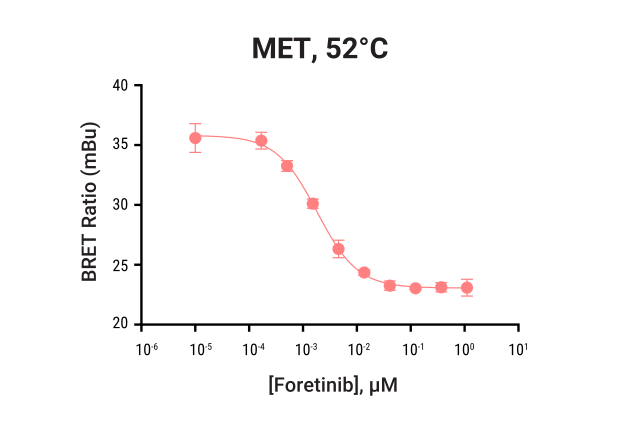
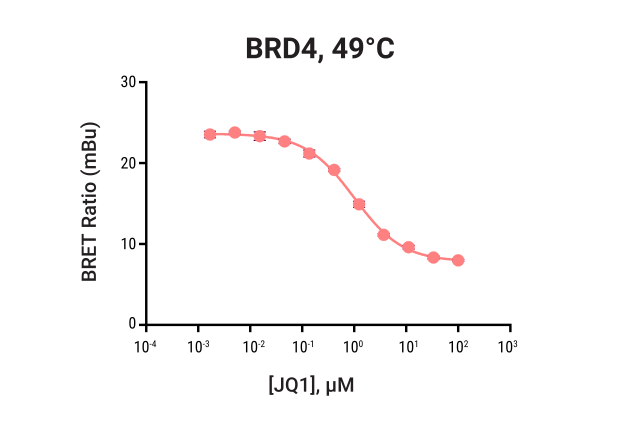
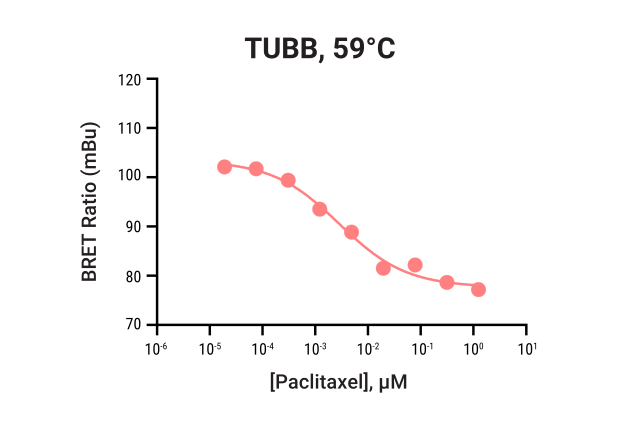
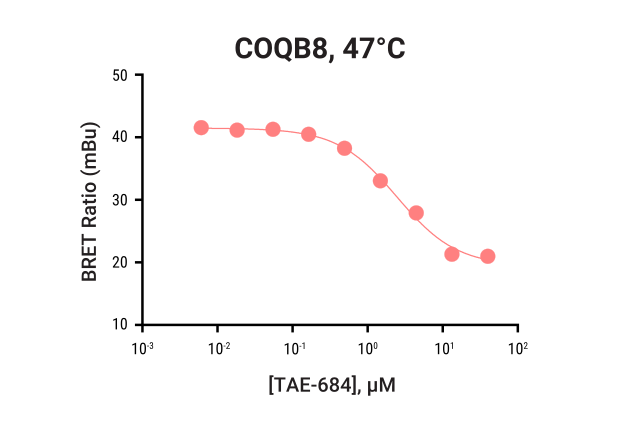
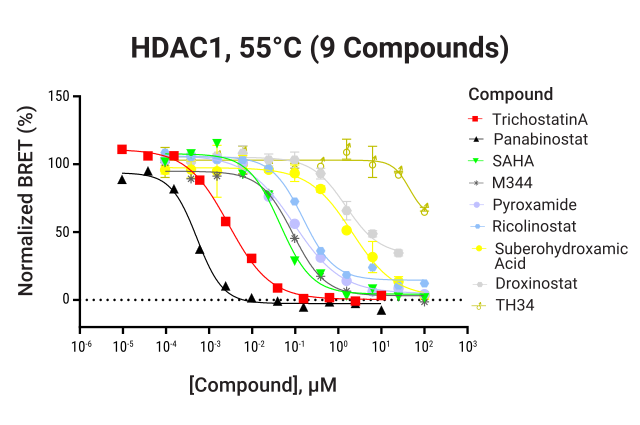
The TarSeer™ BRETSA™ System has been used to measure compound potencies for >70 targets, from >20 target classes, with a dynamic range spanning over 5 logs in concentration. The cellular location of these targets have included the cytosol, nucleus, membrane, mitochondria, ER, and golgi. Concentration response curves for select target-compound interactions are shown (targets include MAPK14, TUBB (cytosol); MET (membrane); COQ8B (mitochondria); BRD4, HDAC1 (nucleus)).
What Early Adopters Are Saying
Advantages of the TarSeer™ BRETSA™ Target Engagement System
- Cellular Target Engagement –Measure cellular target protein stability and compound target engagement, eliminating the need for protein purification used in biochemical methods
- Broad Target Classes –Tested with multiple target classes within many cellular compartments
- Addition-Only Workflow – No separation or transfer steps, simplifying and shortening your work
- Complete Assay System (Coming Soon) – Optimized reagents and protocol are supplied for use in your lab, providing a quick start and eliminating the need to optimize additional detection methods
- Monitor Protein Denaturation, Not Aggregation – Use lower temperatures for thermal challenge, relative to aggregation-based methods
- High Sensitivity – Measure potency and rank compounds relative to each other from picomolar to micromolar concentrations, while operating at lower temperatures
- Microplate Reader Compatible – Compatible with 96-well or 384-well plates, read on standard microplate readers compatible with BRET
- Expert Assistance from Start to Finish – Work with our Tailored R&D Solutions Team to get started with on your BRETSA-based project
Ready to bring your challenging targets within reach?
TarSeer™ BRETSA™ Target Engagement is now available through our Early Access program.
See how BRETSA™ can enable quantitative, cell-based measurements for tough targets in drug discovery.