Forensic DNA Analysis Workflows
The chemistry and platforms behind forensic capillary electrophoresis systems (CE) have advanced, helping casework labs resolve more mixtures, type more loci from challenging samples, and report with greater confidence. We provide the complete CE workflow to make those gains real, from sample to profile, with the support to implement it.
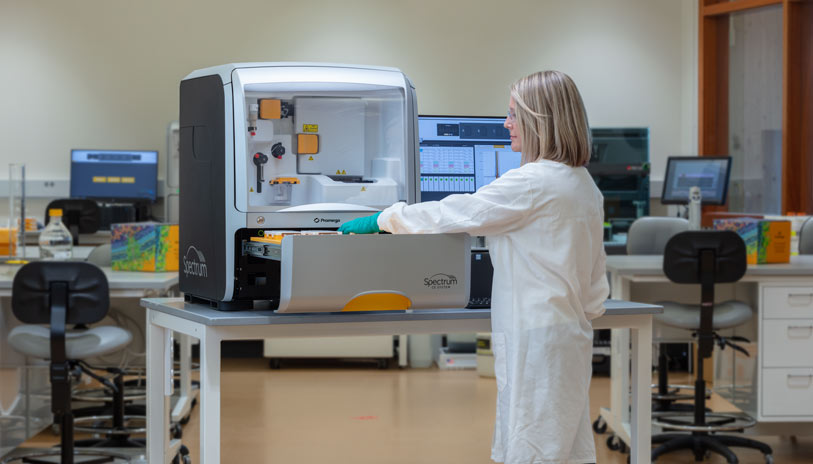
DNA preprocessing and isolation reagents prepare casework, database, and reference samples. The PowerQuant® System delivers human-specific quantitation. PowerPlex® Systems cover autosomal and Y-STR analysis to CODIS and regional database requirements, and the Paradyme™ 27GY STR System brings reduced-stutter polymerase (RSP) technology that sharpens mixture interpretation. Analysis runs on the Spectrum CE Systems (Compact, 8-Cap, and 24-Cap), a family designed and validated for 8-dye forensic chemistry, not adapted to it.
Behind it all is the support labs value most: Validation Services led by former practitioners, expert training, and forensic-savvy technical support. For data analysis, we offer GeneMarker®HID Software for Spectrum CE Systems, and you have the flexibility to use FaSTR™ DNA or, for 4- to 6-dye kits, GeneMapper® ID-X Software.
CE Analysis Product Groups
Preprocessing and Differential Extraction
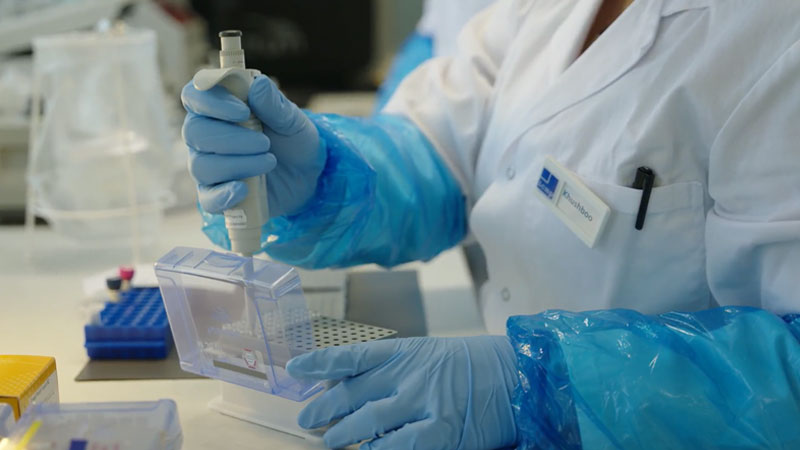
Reagents to help you pretreat swabs and storage card punches prior to direct amplification, preprocess challenging casework samples and easily separate sperm and epithelial cells.
DNA Isolation
DNA extraction systems that allow you to yield pure, intact DNA and save time with automation.
Human-Specific DNA Quantitation
Systems to help you determine human genomic DNA concentration prior to STR amplification, assess DNA integrity and detect PCR inhibitors.
STR Amplification
STR amplification systems for your forensic, paternity and relationship-testing applications. We offer systems to amplify the expanded CODIS, ENFSI-recommended, Penta D and Penta E loci.
CE Analysis
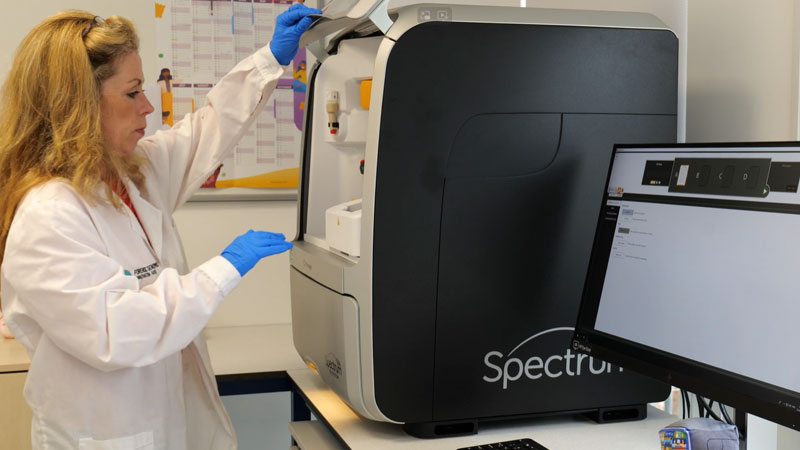
The Spectrum CE System and Spectrum Compact CE System offer a choice for forensic laboratories: big and powerful, or small and economical.
Top Forensic Analysis Products for Your Lab
Maxwell® DE System
Semi-automated, medium- and high-throughput separation of sperm and non-sperm fractions of sexual assault samples.
AS1870, AS7111
Maxwell® FSC DNA IQ™ Casework Kit
Extract DNA from 1–16 casework samples using the Maxwell® FSC Instrument.
AS1550
PowerQuant® System
5-color, 4-target probe-based qPCR assay.
PQ5002, PQ5008, DS1221
Paradyme™ 27GY STR System
27-locus STR multiplex with reduced-stutter for clearer, faster mixture analysis.
RS2705, RS2720, DG5050, DM1701
Spectrum Compact CE System
An affordable benchtop instrument for Sanger sequencing and fragment analysis.
CE1304, CE1307, CE1305
Spectrum CE System
A high-throughput capillary electrophoresis system for forensic and paternity labs.
CE1008, CE1024
Forensic Analysis Basics
The vast majority of the human genome is identical among diverse individuals. However, there are small regions of variation, especially in areas with repetitive sequences. One example is short tandem repeats (STRs) that can vary in length among individuals, with each repeat consisting of three to five nucleotides of DNA. Analysis of these repeats reveals a characteristic pattern for each individual that is inherited from paternal and maternal DNA. Forensic DNA databases use these patterns of STRs for human identification, and each national database has requirements for specific STR loci that are included.
To characterize these STR patterns, or DNA profiles, human genomic DNA is amplified using the polymerase chain reaction (PCR) with sets of primers for each STR being tested. The primers are labeled with fluorescent dyes, and the amplified products are separated according to size by capillary electrophoresis (CE). Fluorescence imaging by the CE instrument results in a set of peaks for each dye channel, which together constitute an electropherogram that serves as a DNA “profile” for that individual. Statistical analysis of the DNA profile and comparison to reference databases can predict whether the individual matches a known DNA profile, with a high power of discrimination.
Validation Services
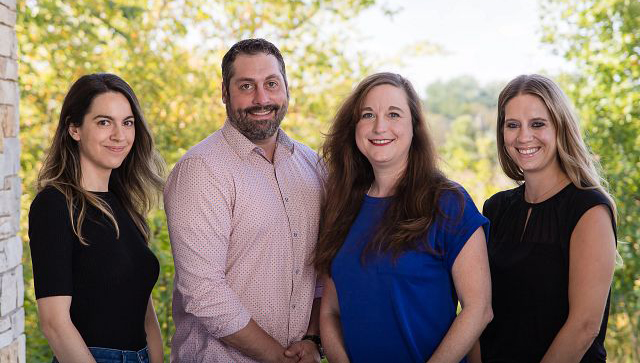
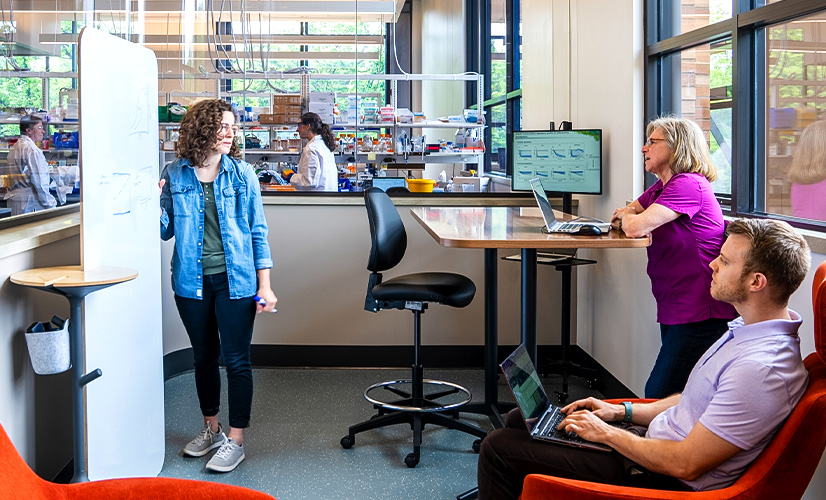
Forensic validation is complex and time consuming, and it is the step that most often stalls a technology change. Our Validation Services removes that barrier for forensic labs worldwide. Our global team of former forensic practitioners designs a validation solution around your laboratory's needs and preferred scope of work, whether casework or database, with final deliverables that comply with current forensic guidelines and standards. You move to better tools without pulling analysts off casework for months.
Consultative & Customized
The Studies Your Method Requires
Deliverables & Support
Testimonials and Case Studies
Across the world, forensic scientists are pushing the boundaries of what’s possible in DNA analysis—bringing clarity, accuracy and justice to the cases that matter most. Every profile generated and every case solved begins with their skill, perseverance and commitment to truth. These stories celebrate the professionals whose dedication and expertise continue to advance forensic science, turning complex challenges into confident results.
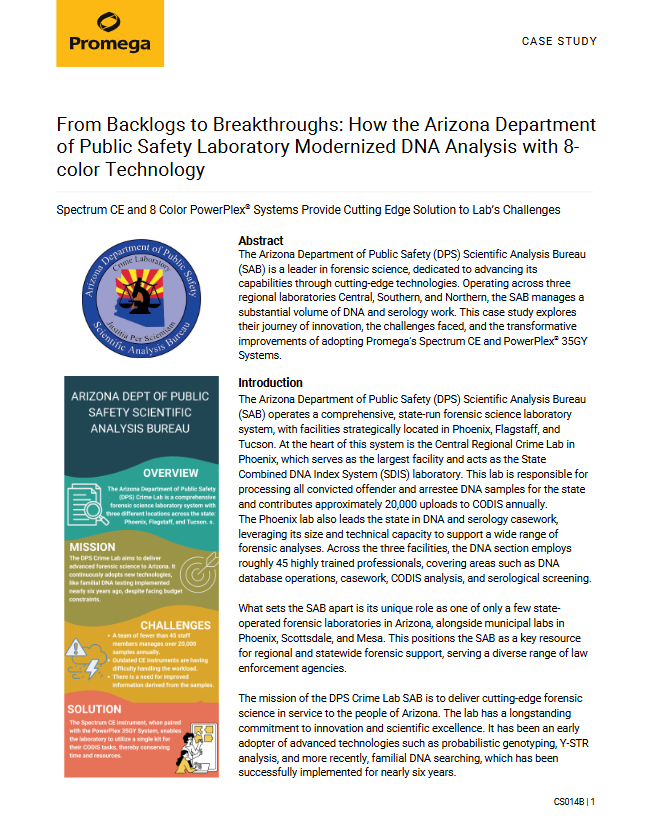
From Backlogs to Breakthroughs: How the Arizona Department of Public Safety Laboratory Modernized DNA Analysis with 8- color Technology